


When Justin Werlein released a video acknowledging that he had not always been profitable in his early trading career, the reaction was immediate and intense.
Within hours, reaction videos surfaced. Commentary channels amplified the clip. Threads circulated questioning his credibility. Members of the trading community debated transparency, ethics, and intent. Refund requests followed. The narrative quickly polarized.
From the outside, it appeared to be reputational fallout.
From a strategic lens, however, the situation reflected something more structured.
It demonstrated how relevance, even under pressure, can be engineered.
Understanding the Attention Cycle
Justin Werlein is not new to the trading industry. He has built a substantial community over years, mentored thousands of traders, and maintained long-term visibility in a highly skeptical market.
That longevity matters.
Individuals who operate in high-volatility industries develop a deep understanding not only of markets, but of audience psychology. They understand that attention operates in cycles, and that digital ecosystems reward emotional intensity over neutrality.
The release of a video acknowledging past struggles disrupted the prevailing narrative around certainty and consistent profitability, a narrative common within trading education.
Disruption, in saturated markets, forces re-evaluation.
And re-evaluation forces attention.

The Strategic Context
At the time of the video’s release, a new product had been in development for approximately twelve months: Session Buddy — a trading tool positioned as a practical execution aid rather than another educational program.
Innovative products in established markets face a recurring obstacle: indifference.
Announcements alone rarely create traction. Incremental messaging in crowded verticals often disappears into algorithmic noise.
Before a launch can gain momentum, narrative gravity must exist.
This is where strategic sequencing becomes critical.
Months prior in December, the foundational framework was mapped. Product readiness, audience segmentation, tracking infrastructure, and distribution pathways were aligned in preparation for heightened visibility.
Visibility without preparation produces volatility.
Visibility with preparation produces leverage.

Controlled Disruption vs. Reputational Collapse
There is a meaningful distinction between uncontrolled controversy and controlled disruption.
Uncontrolled controversy damages trust because it lacks containment. There is no clear positioning, no sequencing, no infrastructure to manage the emotional aftershock.
Controlled disruption, by contrast, is introduced into a prepared ecosystem.
For such a strategy to function, several conditions must be met:
- Clear segmentation of core community vs. peripheral observers
- Clean tracking systems capable of measuring behavioral shifts
- Defined follow-up messaging
- Product readiness aligned with heightened attention
- Conversion pathways mapped prior to exposure
Without these structural components, backlash escalates into erosion.
With them, backlash becomes amplification.
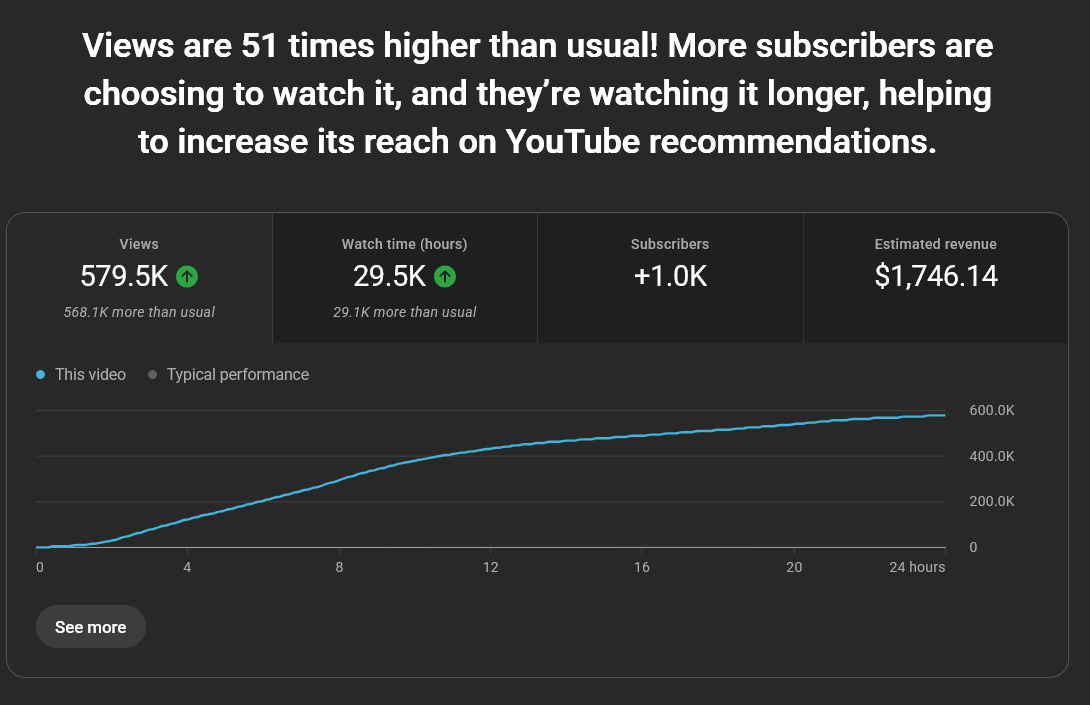
In Justin Werlein’s case, the intensity of reaction videos, commentary threads, and community debate functioned as an unpaid distribution engine. Reaction content extended reach far beyond the immediate audience. Emotional discourse sustained visibility across platforms. The algorithm rewarded engagement, regardless of sentiment.
This is not accidental mechanics.
It is how digital ecosystems operate.

Narrative Control in Saturated Industries
Trading education is one of the most crowded and skeptical verticals online. Credibility is fragile. Trust is hard-earned. Claims of perfection are common, and increasingly scrutinized.
By openly acknowledging imperfection, Justin disrupted the illusion of linear success that dominates the space. The reaction was predictable. What mattered was not the criticism itself, but how the attention wave was managed.
Fenix Network Media’s strategic approach centers on anticipation rather than reaction. Reaction curves are modeled. Community sentiment thresholds are evaluated. Amplification patterns are analyzed before volatility is introduced.
The objective is not controversy for its own sake.
It is controlled narrative redirection.
When properly executed, disruption reframes positioning rather than destroys it.

The Broader Strategic Lesson
Most founders attempt to grow quietly. They protect optics. They minimize friction. They avoid emotional tension.
However, in saturated digital markets, neutrality rarely scales.
Markets reward clarity of position. Algorithms reward intensity of engagement. Communities respond to perceived authenticity even when it is uncomfortable.
Relevance, therefore, is not passively accumulated. It is deliberately constructed through timing, structure, and psychological sequencing.
The difference between reputational damage and strategic amplification lies in preparation.
Justin Werlein’s situation illustrates a broader principle:
In modern digital ecosystems, attention is not merely attracted.
It is engineered.
And when engineered correctly, even backlash can become leverage.